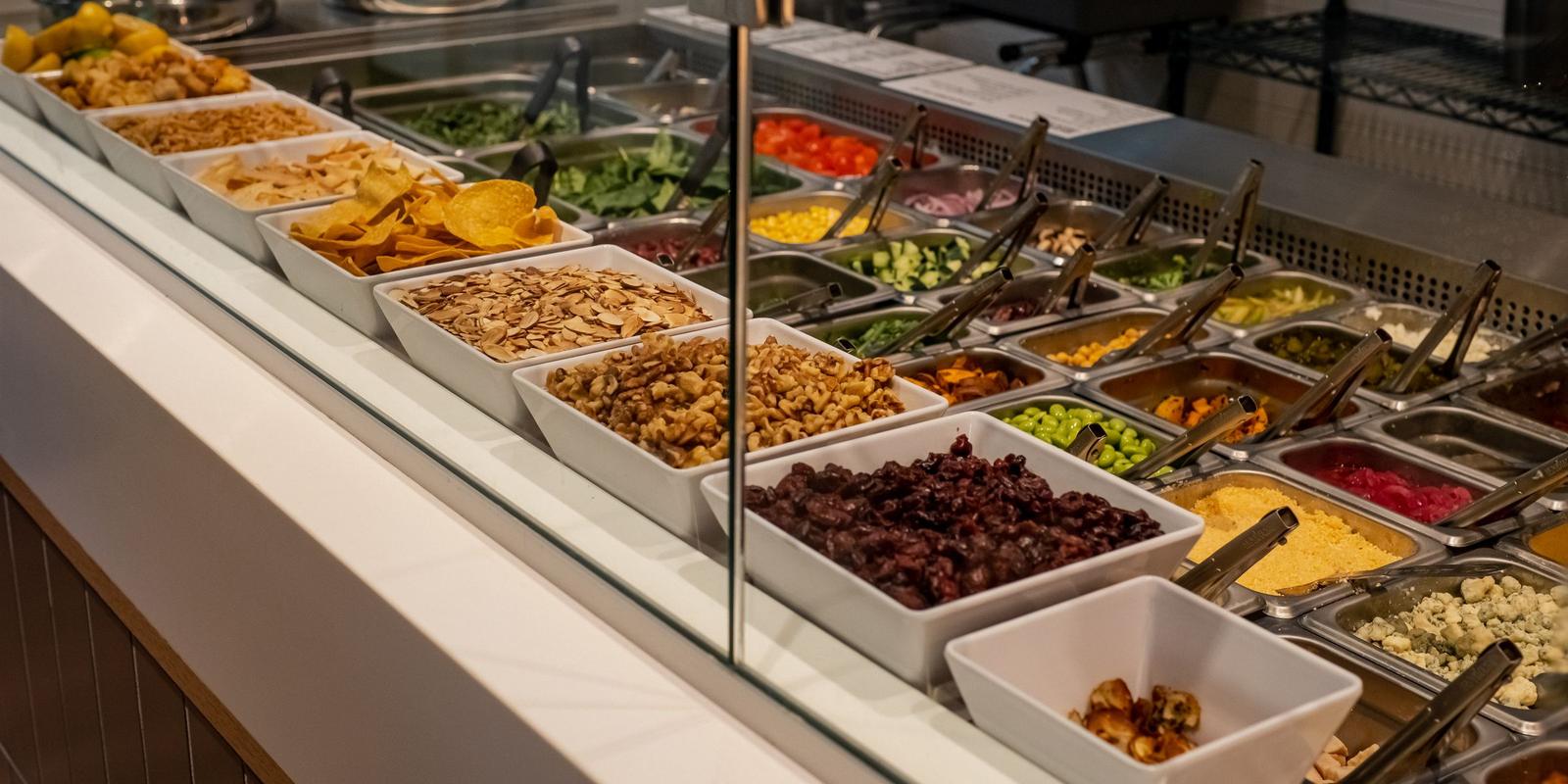
Start with a vegetable-rich base
A salad works well as the fresh portion of lunch when it includes more than one vegetable. Leafy greens can provide a starting point, with other vegetables contributing different textures, colors and flavors if they are available. Selecting a few things you enjoy is more useful than building a towering plate simply because many choices are present.
The CDC advice on balanced meals and snacks encourages a variety of vegetables and fruits, protein foods and fiber-rich whole grains. It also recognizes that portions matter, including the amount of dressing or other condiments. That supports a practical habit: take enough vegetables to enjoy them, then decide what else the meal needs. We cannot verify every historical topping at Cooperage, so these suggestions describe categories of food a person might encounter at a salad bar or keep at home.
Add protein and substance
A bowl of greens may be refreshing without feeling substantial enough for the rest of the afternoon. When offered, beans, eggs or other protein-containing foods can change that experience. Whole grains or other fiber-rich ingredients can provide another kind of substance. The point is to consider whether lunch contains a satisfying mix, rather than assume a larger pile of lettuce will always do the job.
Soup can contribute to that balance, too. A broth-based vegetable soup may provide warmth and additional produce while leaving room for a heartier salad. A soup containing beans, meat or other protein may already make the meal more filling, allowing the salad to remain simple. These examples are not health promises; individual needs vary. A person avoiding an ingredient should check the actual recipe rather than rely on a general soup name.
Let the soup complement the salad
Rather than build two equally heavy dishes, consider how one can supply what the other lacks. In the examples below, every ingredient is hypothetical and depends on availability. Neither combination is a record of what Cooperage served. They illustrate a choice that works whether a meal is assembled at home or from a clearly labeled buffet.
| Soup focus (illustrative) | Salad focus (illustrative) | Why the pair works |
|---|---|---|
| Vegetable-rich broth soup, if available | Greens with beans or another protein food, if available | Soup supplies warmth; salad adds bite and substance. |
| Hearty bean or protein-rich soup, if available | A simple mix of fresh greens and vegetables | Soup carries the heavier part of lunch; salad adds freshness. |
A creamy soup could call for a lighter, crisp salad, while a strongly seasoned soup might sit better beside milder vegetables. Think about the combination before returning for more of either dish. That small decision can make a soup and salad bar meal feel deliberate rather than assembled at random.
Handle a self-serve bar thoughtfully
Food safety belongs in the lunch decision, particularly when several people use the same serving area. Follow food-safety considerations for salad bars: hot foods should be kept hot and cold foods cold. FoodSafety.gov advises avoiding lukewarm food, and specifically notes that buffet soup should be hot while chilled salad items stay chilled. Appearance alone is not proof of safe holding, but obvious problems such as food sitting without temperature control are good reasons to ask staff for clarification or choose something else.
Use the utensil provided for each dish and avoid allowing the serving end to touch your own plate or hands. If a clean utensil is missing, ask for one instead of borrowing from another container. People with allergies or other dietary restrictions should verify ingredients and possible cross-contact rather than assume a self-serve arrangement makes them identifiable. These are general precautions, not claims about the monitoring records or inspection history of Cooperage's former buffet.
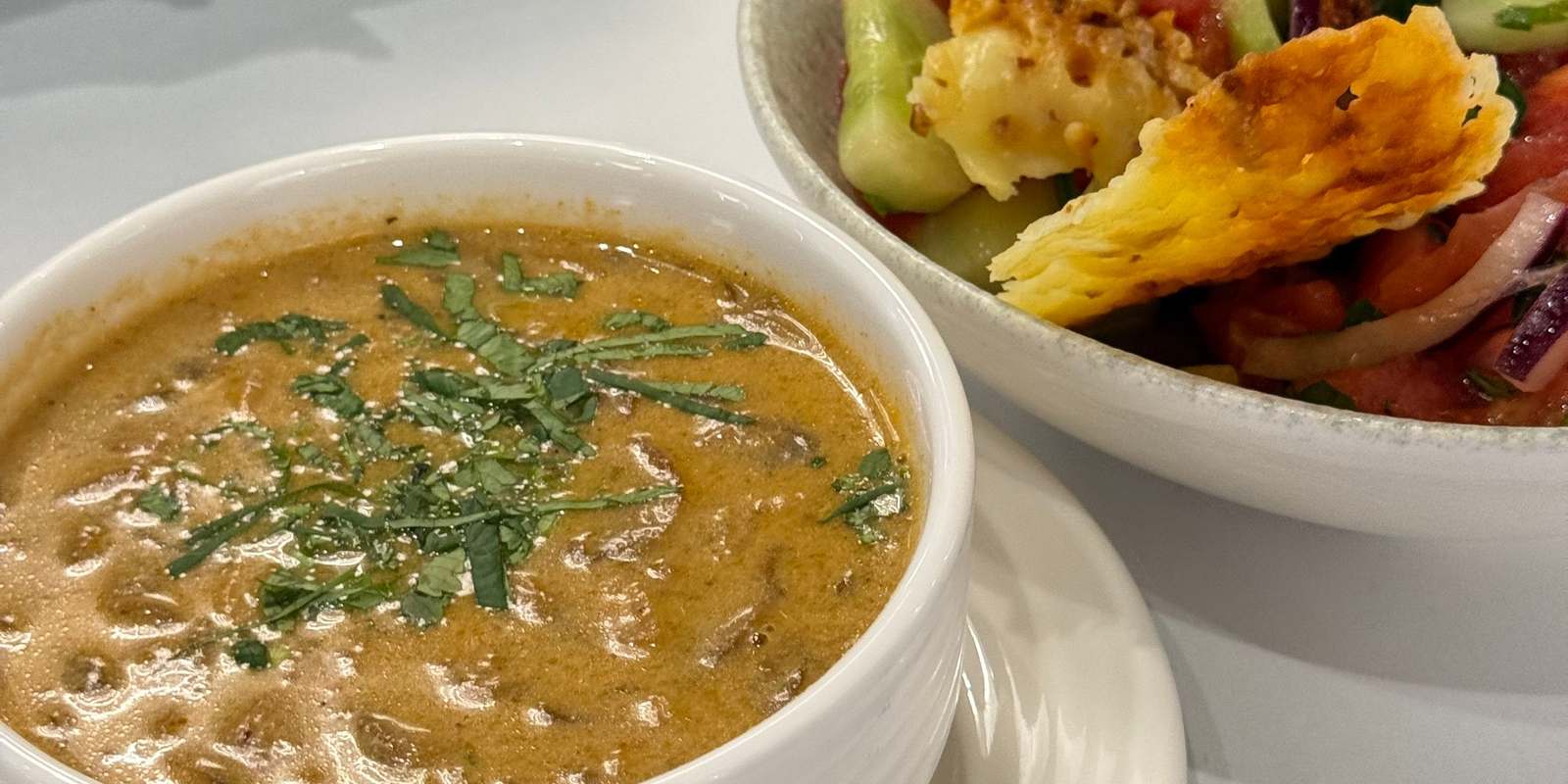
Make room for personal preference
One person may want a hearty soup and a few crisp vegetables; another may prefer a large salad with protein and a lighter cup of soup. Both can be sensible ways to assemble lunch when the ingredients suit the eater. Our historical soup and salad bar represented that flexibility, and its memory invites a practical question: do the two dishes work together? Start with vegetables, add sufficient substance, keep food safety in view, and let your appetite guide the final balance.