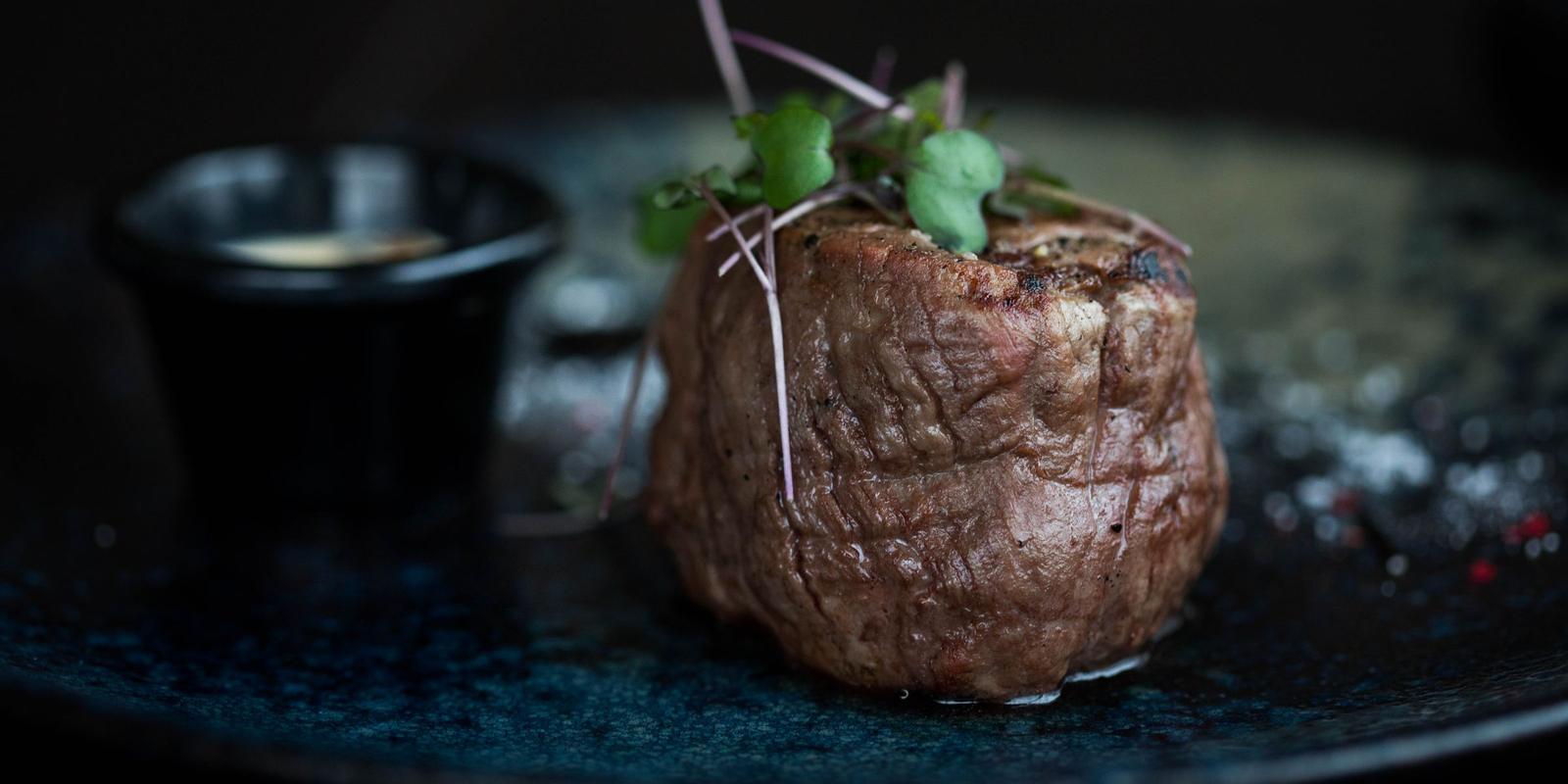
What bacon adds to tenderloin
Beef tenderloin is prized for its tender texture and relatively lean character. Its flavor can be subtle compared with cuts that contain more marbling. Bacon contributes salt, richness and, depending on how it was cured or smoked, a deeper smoky note. Wrapped around the steak, it makes the edge taste quite different from the center.
That contrast is the point of the pairing. The bacon provides a pronounced accent without requiring the tenderloin itself to become heavily seasoned. Our archived menu records the combination, but does not identify the bacon brand, its curing method, its thickness or a house seasoning formula. Those details should not be reconstructed from a menu name.
Why two components need different attention
The steak's center and its bacon covering do not respond to heat in exactly the same way. Tenderloin is a thick, relatively uniform muscle; bacon is a thin strip whose fat and lean portions change as they heat. The outside may brown before the center is adequately cooked, while prolonged heating intended to firm the bacon can alter the filet's texture.
Home cooks can observe the wrapping and the middle separately, but appearance is not a reliable safety test. Brown bacon does not establish that the beef center has reached a safe temperature. Equally, a tender-looking center does not reveal whether every part has cooked adequately. Handling also matters before heat is applied: raw bacon and raw beef can transfer microbes to utensils and other foods. The FDA recommends separating raw meat from ready-to-eat foods, along with cleaning work surfaces and hands after contact.
Food safety that matters more than the name
Restaurant shorthand such as 'rare' or 'medium-rare' describes a preferred eating experience; it does not replace a verified internal temperature. For whole-muscle beef steaks, the US government's safe minimum temperature for beef steak is 145°F, followed by at least three minutes of rest. A food thermometer should be placed in the thickest part of the meat, away from the outer wrap, to check the steak itself. Check the bacon too; a browned patch alone is insufficient.
Resting has a food-safety purpose in that recommendation. It gives the interior time at temperature after removal from the heat, so the three minutes should not be silently dropped from the guidance. the archived menu does not document how our kitchen performed these checks. Readers preparing their own version should follow current food-safety recommendations rather than assume a historical menu description establishes a cooking method.
What complements the finished flavor
Because bacon already adds salt and richness, accompaniments can work best when they create a little space around the main flavor. A simply prepared vegetable provides a different texture. A mild potato or grain can temper the intensity of the outer bite. A sauce, if used, should be judged for how much additional salt and fat it brings instead of being treated as a required finishing touch.
There is no single pairing that suits every appetite. Someone who particularly enjoys bacon may prefer an unobtrusive side; someone focused on the tenderloin may want the sauce restrained so that the beef remains noticeable. These are ways of thinking about flavor balance, not a list of garnishes or sauces we can verify from the former filet entry.
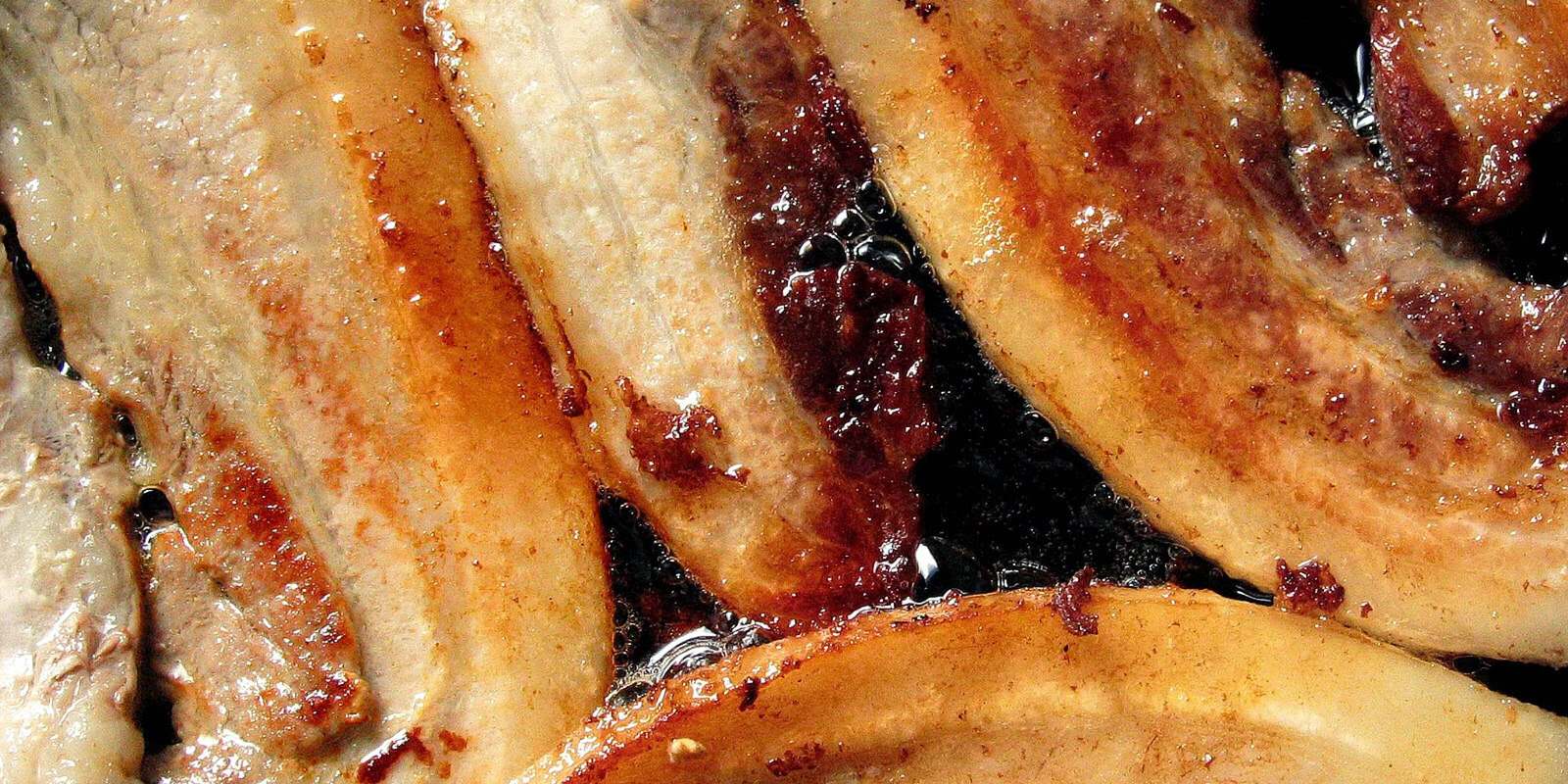
The enduring menu idea
Our old bacon-wrapped filet was memorable in concept because it combined tenderness with a deliberately stronger edge. The two ingredients offered more than a decorative wrap: they created changing flavors and textures across a single steak. The menu preserves that choice, even though it does not preserve the exact preparation. Looking back at it is an opportunity to understand a classic steakhouse contrast while keeping safe handling and accurate historical claims separate from culinary nostalgia.